
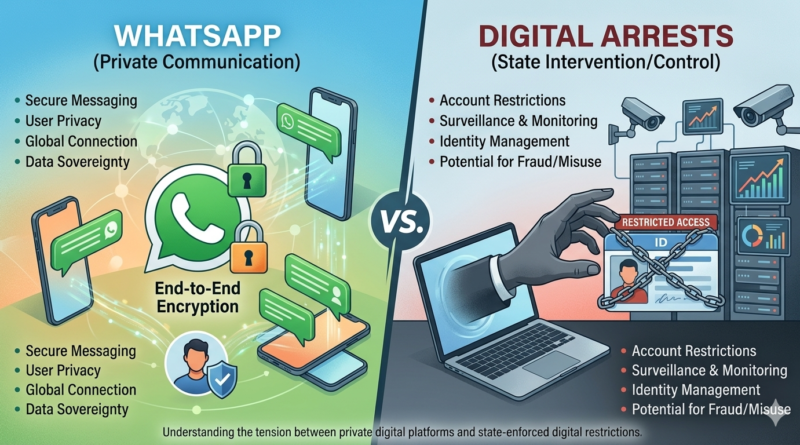
WhatsApp vs. Digital Arrests: 9,400 Accounts Banned as SC Probes ₹30,000 Crore Scam Network
NEW DELHI — In a status report filed before the Supreme Court, WhatsApp has revealed a massive crackdown on “Digital Arrest” syndicates, banning over 9,400 accounts linked to law enforcement impersonation. The platform told the Home Ministry that it is moving beyond isolated reports to “map and disrupt” entire criminal networks, many of which are operated by traffickers based in Cambodia.
The ‘Seed’ Strategy: Mapping the Network
WhatsApp explained that it no longer treats government warnings as one-off incidents. Instead, it uses each report as a “seed” to:
- Trace Creators: Identify the administrators behind groups promoting scam activity.
- Identify Groups: Map out the entire ecosystem of accounts used to psychologically coerce victims.
- Mass Deletion: Take down the entire cluster of accounts associated with a specific scam network simultaneously.
New Tech Defenses: SIM Binding and AI
The report, submitted by the Indian Cybercrime Coordination Centre (I4C), highlighted several high-tech measures discussed in a high-level meeting involving WhatsApp and major TSPs like Airtel, Jio, and BSNL:
- SIM Binding: WhatsApp is working on linking accounts directly to physical SIM cards to prevent the use of bulk-generated virtual numbers.
- SGI Labeling: Under the IT Rules 2021, the platform will identify and label ‘Synthetically Generated Information’ (SGI)—the AI-generated deepfakes often used in “Digital Arrest” video calls.
- Device ID Blocking: Stakeholders agreed to introduce mechanisms to block the specific Device IDs used by fraudsters, making the hardware itself useless for future scams.
- 180-Day Data Retention: To assist police, WhatsApp has agreed to keep data from deleted scam accounts for at least six months.
“Offence Against Human Dignity”
The Supreme Court, led by Chief Justice Surya Kant, has taken suo motu cognisance of the crisis. The CJI described digital arrests as the “most disturbing” cybercrime, noting that they inflict a “blistering sense of violation” on victims.
“Such crimes must not be seen as mere economic offences, but an offence against human dignity,” the CJI remarked.
The Scale of the Crisis
The data presented to the court reveals a staggering impact on the Indian public:
- Total Complaints: Over 2.41 lakh related to digital arrests alone.
- Financial Loss: Approximately ₹30,000 crore lost by Indian citizens.
- Vulnerable Targets: The court cited the case of a 78-year-old woman lawyer who was psychologically coerced into surrendering her savings.