
Prehistoric Rock Art Site ‘Re-discovered’ in the Nilgiris
KOTAGIRI (TAMIL NADU) — In a significant find for Indian archaeology, the Yaakai Heritage Trust has reported the re-discovery of a prehistoric rock painting site in the rugged terrain of the Nilgiris. Known locally as ‘Oor Pare’, the site holds deep spiritual significance for the Irula and Kurumba indigenous communities and offers a rare window into the ritualistic lives of prehistoric humans.
A Journey Through ‘Challenging’ Terrain
The site was located by researchers Sudhakar Nalliyappan and Kumaravel Ramasamy during a field survey northwest of the famous Vellarikombai village. Reaching the rock shelter is an arduous task that requires:
- A 450-metre Vertical Climb: Access involves scaling a steep, rocky slope 1,100 metres above sea level.
- Vine Ladders: Researchers had to use traditional vine ladders—typically used by tribal communities for honey collection—to reach the paintings.
- Seasonal Access: During the monsoon, the rock surface transforms into a waterfall, making the site reachable only during the summer months.
The Art: Red Ochre and Ritual Symbols
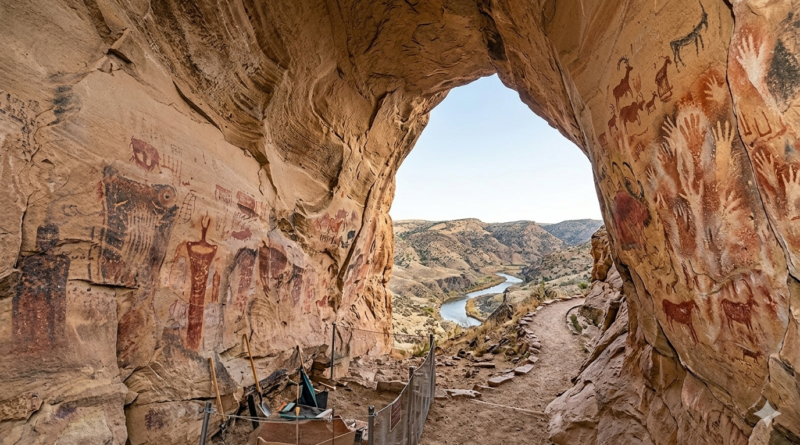
The researchers recorded approximately 30 identifiable figures executed entirely in red ochre. The paintings cover an expansive area of the rock face (638 cm by 540 cm) and feature several distinct motifs:
- Anthropomorphic Figures: Human-like forms wearing unique conical headdresses.
- Abstract Anatomy: Figures with elongated limbs and “ladder-like” body structures.
- Ritualistic Symbols: Rectangular patterns filled with dots, suggesting ancient supernatural beliefs and ceremonial practices.
Sacred Connection to Tribes
For the Irula and Kurumba tribes, ‘Oor Pare’ is more than an archaeological site; it is a sacred space and a traditional resting place used during honey-gathering expeditions. Its proximity to other known sites like Eluthuparai and Tholikkiparai confirms that this region was a major hub for prehistoric artistic activity.
Urgent Call for Protection
The Yaakai Heritage Trust has raised an alarm regarding the deteriorating condition of the site. Water seepage, moss growth, and insect activity are slowly erasing these ancient records. The Trust has appealed to the government and heritage bodies for immediate intervention to protect this “open-air gallery” of human history.