
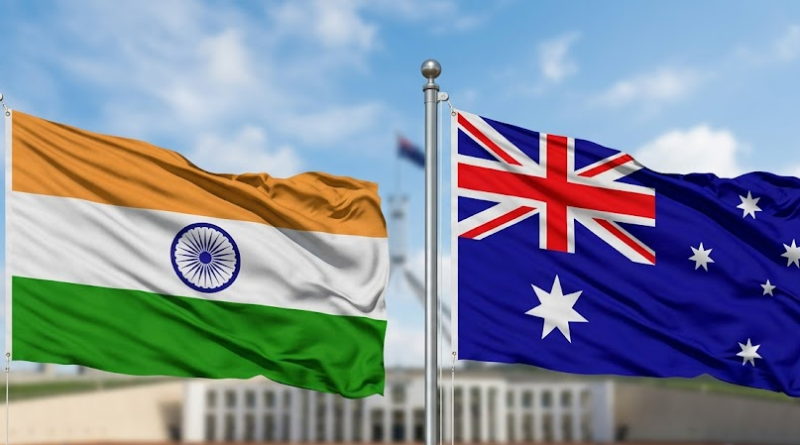
Anchoring the Indo-Pacific: India and Australia Seal Landmark Defense and Nuclear Pacts
In a decisive move to counter growing geostrategic uncertainty across the Indo-Pacific, India and Australia have officially adopted a comprehensive Joint Declaration on Defence and Security Cooperation. The sweeping strategy, greenlit by Prime Minister Narendra Modi and Australian Prime Minister Anthony Albanese, dramatically deepens bilateral military integration while locking down vital commercial supply chains in civil nuclear energy and critical minerals.
This agreement builds directly upon their 2009 security framework, signaling a mature evolution from casual diplomatic alignment to a hard-nosed, practical defense alliance.
The Strategic Blueprint: Deepening Military Interoperability
The joint declaration provides an aggressive roadmap designed to enhance the combat readiness and synchronicity of both nations’ armed forces. Rather than relying on purely symbolic gestures, the mandate focuses heavily on structural, boots-on-the-ground defense mechanics.
According to official briefings from the Australian Prime Minister’s office, the core defense directives include:
- Enhanced Interoperability: Accelerating combined technical and operational capabilities between both workforces.
- Complex Warfighting Exercises: Increasing the scale and sophistication of bilateral and multilateral military drills.
- Territorial Aircraft Deployments: Expanding cross-continental military aircraft deployments from each other’s bases.
- Intelligence & Information Sharing: Streamlining real-time data sharing and holding regular strategic consultations on Indo-Pacific threats.
- Personnel Integration: Deepening educational exchanges, training routines, and joint liaison appointments.
Powering Clean Energy: The $300 Billion Nuclear & Mineral Corridor
Beyond hard power, the bilateral architecture directly addresses resource security. Nearly 12 years after signing their baseline civil nuclear cooperation pact, the two democracies have finalized a commercial pipeline for Australian uranium to directly fuel Indian power grids.
Key Resource & Energy Pillars:
- Uranium Supply Pipeline: Reopens commercial channels to export Australian uranium to India, supercharging New Delhi’s domestic clean energy objectives.
- Critical Minerals Corridor: Establishes a secure supply chain for materials vital to next-generation electronics, aerospace, and renewable infrastructure.
- Liquid Fuel Security: Commits to stabilizing the supply and distribution of coal, diesel, natural gas, and alternative liquid fuels under an energy security framework.
- Cyber & Tech Partnership: Launches the Australia-India Partnership on Cyber, Critical Technologies, and Supply Chains to safeguard critical digital architecture.
Core Pillars of the Shared Indo-Pacific Architecture
| Focus Area | Core Initiative | Institutional Overlap |
| Maritime Defense | India-Australia Maritime Security Collaboration Road Map | Indian Ocean Rim Association (IORA) |
| High-Level Diplomacy | 2+2 Foreign and Defence Ministerial Dialogue | ASEAN-led Regional Architecture |
| Industrial Integration | Defense Science, Technology, and Supply Chain Integration | Pacific Islands Forum |
Dematerializing the “Two Oceans” Myth
As Prime Minister Modi aptly remarked, the Indo-Pacific is no longer merely a geographical confluence of two vast oceans—it is a explicit ideological alignment of like-minded democracies. For years, cynics viewed the defense cooperation between India and Australia as a slow-moving bureaucratic exercise. This declaration shifts the narrative.
By binding Australia’s massive raw material reserves (uranium and critical minerals) with India’s expanding industrial and military footprint, both nations are creating a formidable counterweight to regional hegemony. True strategic autonomy in the 21st century relies on secure supply chains and cross-continental military access; this agreement ticks both boxes emphatically.