
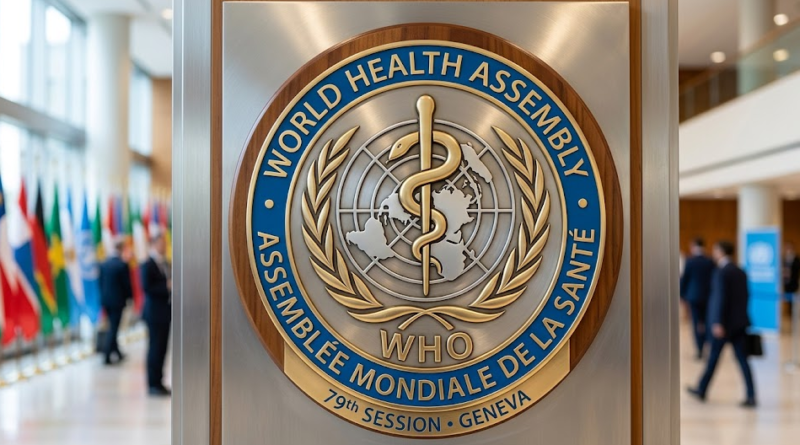
WHA Passes Historic First-Ever Resolution on Strokes
GENEVA — In a landmark decision targeting one of the world’s leading causes of mortality and long-term disability, the World Health Assembly (WHA) on Friday passed its first-ever dedicated resolution on strokes. The resolution elevates the medical condition to a global public health priority and establishes a political mandate urging member states to overhaul their national healthcare frameworks across the entire spectrum of care.
Submitted by Egypt’s Minister of Health and Population, Khaled Abdel Ghaffar, the framework pushes for aggressive interventions in prevention, acute care, systemic health readiness, and long-term neurorehabilitation.
Understanding the Global Burden
The World Health Organization (WHO) classifies a stroke as a critical medical emergency occurring when vital blood flow to the brain is disrupted. This disruption leads to rapid brain cell death and catastrophic long-term neurological complications.
As illustrated above, medical interventions must differentiate between the two main pathways: an ischemic stroke, where an artery block cuts off supply, and a hemorrhagic stroke, involving a ruptured blood vessel. Globally, the scale of this crisis is staggering:
- Annual Incidence: An estimated 12 million people suffer a stroke each year.
- Mortality Rate: More than 50% of all stroke cases prove fatal.
- Morbidity Rate: Two out of every three survivors are left with permanent, life-altering disabilities.
The Crisis Point for India: Early Onset and Severe Deficits
While the resolution sets global targets, health experts emphasize that its implications are particularly urgent for India. Data published in the peer-reviewed International Journal of Stroke reveals a grim domestic landscape.
| Metric | Estimated Impact in India |
| Crude Annual Incidence | 108 to 172 per 100,000 people |
| One-Month Case Fatality Rate | 18% to 42% |
| Specialist Deficit | ~8,000 neurologists/neurosurgeons for 1.4+ billion people |
Medical veterans point out that standard metrics fail to capture the true economic and social devastation. Beyond mortality rates, the country loses millions of critical productive hours, heavily draining family structures and caretakers.
Furthermore, clinical data confirms that strokes hit the Indian population much earlier in life compared to Western nations. While genetic predispositions exist, specialists stress that it is the interaction of these genes with a highly modifiable environment that accelerates risk among the youth.
Reversible Risks and the Digital Opportunity
Despite the stark statistics, public health advocates insist the crisis is manageable because the core risk factors—hypertension, diabetes, tobacco use, obesity, physical inactivity, poor diet, air pollution, and alcohol misuse—are entirely reversible.
Top neurologists are calling the WHA resolution a necessary wake-up call that India is uniquely positioned to answer. By leveraging the nation’s high digital literacy rates and robust telecommunications network, public health bodies could implement scalable, tech-driven preventative models and remote neurorehabilitation protocols, potentially serving as a blueprint for the rest of the developing world.