
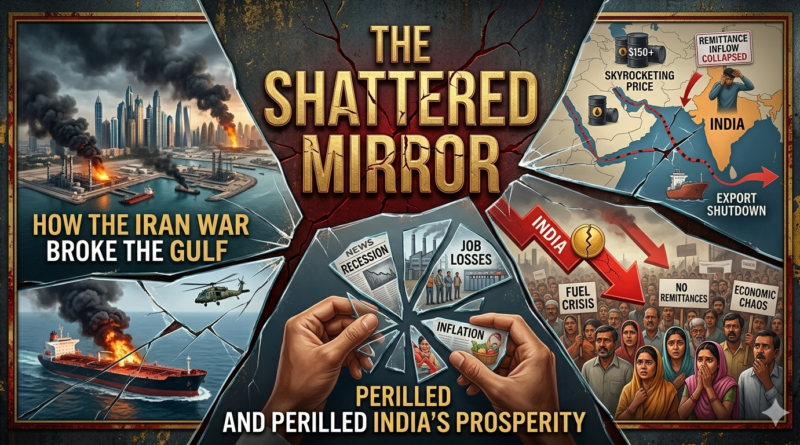
The Shattered Mirror: How the Iran War Broke the Gulf and Perilled India’s Prosperity
Wars are rarely confined to the trenches. As the smoke clears over a gutted Iran, a more chilling reality is emerging: the “Gulf Miracle”—that decades-long narrative of gleaming skyscrapers, effortless connectivity, and a safe haven for global capital—has been shattered.
For India, this isn’t just a distant geopolitical shift. It is a direct threat to our economy, our migrant families, and our strategic future.
1. A Nation Gutted, A Region Unravelled
Reports from the ground depict an Iran that is physically and institutionally broken. Beyond the rubble of cities lies a “decapitated” leadership and a paralyzed bureaucracy. But the tragedy isn’t Iran’s alone.
- The Energy Shock: From the restaurants of Delhi to factories in South Asia, the collapse of Iranian crude and LPG exports has sent inflation biting into the pockets of the working class.
- The Fragility of Oil: The war has exposed the terrifying speed at which global energy security can unravel when concentrated in one volatile corridor.
2. The Death of the ‘Safe Haven’ Myth
For thirty years, the Gulf (Dubai, Doha, Abu Dhabi) sold a promise: “Invest here, work here; we are insulated from the chaos.” That belief has been incinerated.
- The Remittance Crisis: As Gulf employers scale back projects due to soaring insurance premiums and unsettled trade routes, the backbone of India’s remittance economy is trembling. Millions of Indian migrants and their families now face an era of unprecedented anxiety.
- Precarious Connectivity: Dubai, once the world’s most reliable transit hub, now feels like a gamble. Rerouted flights and mounting delays have replaced the aura of “effortless connectivity” with one of “regional fragility.”
3. The Shadow of a ‘Wounded’ Iran
Even when the guns fall silent, the editorial warns of a darker peace. We are likely to see a “wounded” Iranian regime—repressive at home and aggressive abroad.
- Asymmetric Threats: Deprived of conventional strength, a diminished Iran may resort to cyber warfare and proxy disruptions to project influence.
- The American Dilemma: The very U.S. bases meant to provide security to Gulf states may now act as “magnets” for further subversion and attack.
4. India’s Role: The Bridge of Reconstruction
The editorial poses a haunting question: What happens once the Americans fly away? The answer lies in regional cooperation. India, with its historic ties to Iran and its deep strategic partnership with the Arab world, cannot afford to be a silent spectator.
- Necessity over Altruism: Reconstruction of Iran must become a shared regional project—not out of kindness, but out of the cold necessity to prevent a “chaotic Iran” from exporting instability.
- The Lesson: Prosperity built on fragile foundations cannot endure. India must leverage its diplomatic weight to serve as a bridge for reconstruction, ensuring the region doesn’t spiral into permanent dysfunction.
The Bottom Line
The Iran war has rewritten the story of the Middle East. The Gulf is no longer an “untouchable” oasis. As the “Americans fly away,” the nations of the region—including India—must decide: do we build a new narrative of collective resilience, or do we watch as the envy of the world turns into a cautionary tale of despair?