
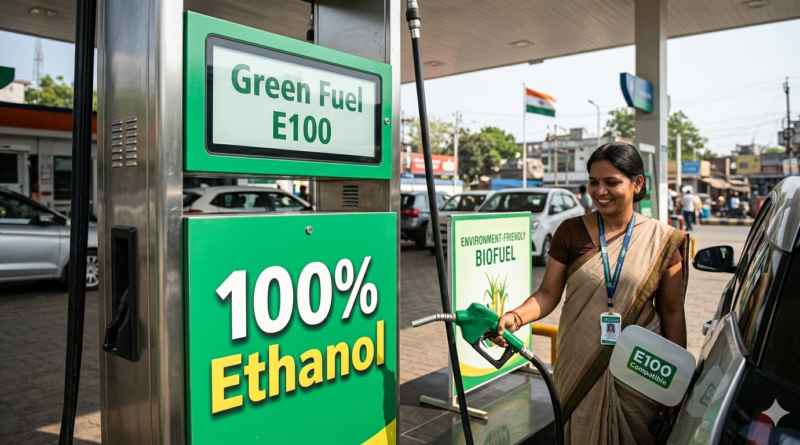
Green Signal for E100: Govt Proposes 100% Ethanol as Approved Automotive Fuel
NEW DELHI — In a move that could fundamentally change India’s fuel landscape, the Ministry of Road Transport and Highways (MoRTH) has issued a draft notification to officially recognize E100 (100% Ethanol) as an approved automotive fuel.
This policy shift moves beyond simple blending targets (like the current E20) to clear the path for vehicles that run entirely on ethanol, effectively ending their dependence on fossil fuels.
Key Policy Changes
The government is proposing amendments to Rule 115 of the Central Motor Vehicles Rules (CMVR). These changes are designed to bridge the gap between “blended” and “pure” fuel technology:
- Upgrade from E85: Vehicles previously approved for up to 85% ethanol blends can now be certified for 100% ethanol.
- Homologation Ready: The amendment allows agencies like the Automotive Research Association of India (ARAI) to grant “type approvals” and “homologation” for E100 vehicles.
- What is Homologation? It is the mandatory certification process where a vehicle is tested to ensure it meets all government safety, technical, and environmental standards before it can hit public roads.
Why This Matters for India
The recognition of E100 is not just a technical update; it is a strategic economic maneuver:
- Reducing Oil Imports: India currently spends billions of dollars on crude oil imports. Shifting to home-grown ethanol (produced from sugarcane, maize, and food waste) keeps that capital within the domestic economy.
- Support for Farmers: Ethanol production provides a steady secondary income for farmers, particularly in sugarcane-heavy states like Uttar Pradesh, Maharashtra, and Bihar.
- Lower Emissions: Ethanol is a cleaner-burning fuel compared to petrol, helping India meet its “Net Zero” carbon commitments.
The Manufacturer Challenge
While the government has cleared the legal path, the ball is now in the court of automakers like Maruti Suzuki, Toyota, and TVS. E100 requires “Flex-Fuel” engines with specific modifications to fuel lines, injectors, and engine mapping to handle the corrosive nature and different combustion properties of pure alcohol.