
White House Upends 60-Year Immigration Rule: Green Card Applicants to Process Abroad
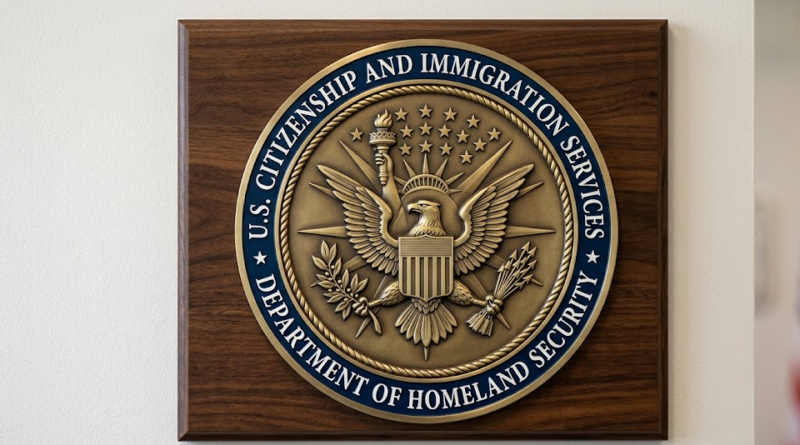
WASHINGTON — In one of the most drastic structural shifts to the American legal immigration system in more than half a century, the Trump administration on Friday announced that most foreign nationals seeking permanent residency from within the United States must leave the country and complete their applications at U.S. consulates abroad.
The policy memo issued by U.S. Citizenship and Immigration Services (USCIS) abruptly scales back “Adjustment of Status”—a routine mechanism that for over 60 years has allowed legal visa holders to transition to a Green Card without leaving American soil. The sudden mandate has triggered widespread alarm across the corporate sector, legal communities, and humanitarian aid groups.
Redefining Legality: Closing the “Adjustment” Loophole
The Department of Homeland Security (DHS) framed the sweeping directive as a long-overdue enforcement measure designed to return to the foundational intent of the nation’s immigration framework.
Under the revised guidance, standard temporary visits will no longer serve as an in-country bridge to permanent residency. USCIS officers have been instructed to treat the ability to adjust status within the U.S. as an “extraordinary form of relief” reserved solely for rare exceptions.
“Nonimmigrants, like students, temporary workers, or people on tourist visas, come to the U.S. for a short time and for a specific purpose,” stated USCIS spokesman Zach Kahler. “Their visit should not function as the first step in the Green Card process. This policy allows our immigration system to function as the law intended instead of incentivizing loopholes.”
The agency further argued that shifting the processing burden to the State Department’s overseas consulates would prevent applicants from “slipping into the shadows” if their permanent residency petitions are ultimately denied.
Economic and Humanitarian Fallout
Immigration advocates and former officials claim the policy’s primary goal is ideological: systematically choking off the path to citizenship. By forcing legal residents to depart the country for months—or potentially years—the rule introduces existential risks for highly integrated segments of the U.S. population.
The directive threatens major disruptions across multiple sectors:
- High-Skilled Labor: Hundreds of thousands of employment-based visa holders, particularly Indian tech professionals and doctors on H-1B visas, face severe career fragmentation. Tech and healthcare sectors fear a massive brain drain if vital workers are marooned abroad during processing delays.
- Mixed-Status Families: Spouses of U.S. citizens may face indefinite, state-mandated separation from their families while waiting out consular backlogs in their countries of origin.
- Humanitarian Vulnerabilities: Refugee advocates warn that the policy places trafficking survivors and asylum seekers in a dangerous “Catch-22,” forcing them back to the unstable or hostile environments they initially fled just to file paperwork.
Deepening Backlogs and Consular Chaos
The administration’s announcement is notably sparse on execution details. The policy memo fails to specify an exact effective date, leaves the fate of hundreds of thousands of currently pending adjustment applications in limbo, and fails to define what constitutes the “extraordinary circumstances” or “national interest” exemptions that would allow an applicant to remain in the country.
Legal analysts predict the mandate will severely overwhelm an already backlogged U.S. consular network, where visa appointment wait times in certain countries already exceed a year. Furthermore, immigration attorneys point out that consular decisions are virtually unchallengeable compared to domestic USCIS reviews, stripping applicants of standard legal recourse.
Coming on the heels of aggressive passport revocations, shortened student visa durations, and strict geographic travel pauses, Friday’s directive marks the administration’s most aggressive effort to date to curtail not just unauthorized border crossings, but the infrastructure of legal migration itself.