
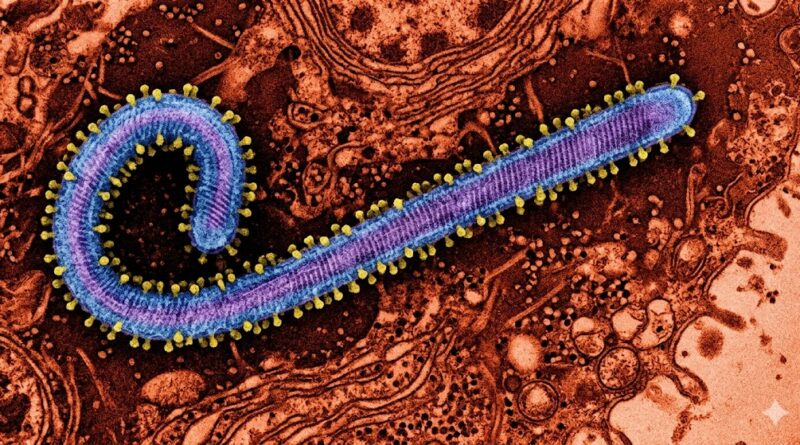
Centre Mandates Nationwide Ebola Readiness Following WHO Emergency Declaration
Table of Contents
In a proactive move to fortify our public health defenses, the Centre has officially directed all States and Union Territories to immediately ramp up disease surveillance, rapid response systems, and hospital for Ebola readiness. This nationwide alert follows the World Health Organization’s (WHO) recent declaration of the ongoing Ebola outbreak in the Democratic Republic of Congo (DRC) and Uganda as a Public Health Emergency of International Concern.
Let us be clear on the immediate threat level: the current risk to India remains decisively low. Union Health Secretary Punya Salila Srivastava, in a detailed communique to state governments, emphasized that the highest transmission risks are currently confined to African nations bordering the outbreak zone, such as South Sudan.
However, as any veteran of the post-2020 world knows, modern global trade and international transit mean a localized outbreak is only ever a flight away from becoming a domestic challenge. The Centre’s directive is a textbook example of acting before a threat materializes.
Ebola Readiness: The Defense Blueprint
The Ministry of Health has not merely issued a warning; it has circulated a comprehensive Standard Operating Procedure (SOP) covering everything from sample collection to biomedical waste management.
Here is what the government’s operational roadmap demands from state health departments:
- Targeted Surveillance: States must intensify tracking under the Integrated Disease Surveillance Programme (IDSP). Health officials are instructed to look for unusual clusters of fever and specific symptoms—particularly among individuals with a recent travel history to the affected African regions.
- Infrastructure & Isolation: State authorities are required to immediately designate isolation facilities and ready dedicated, infection-controlled ambulances. Stockpiling Personal Protective Equipment (PPE) and securing critical-care logistics is mandatory.
- Rapid Response: Multidisciplinary Rapid Response Teams must be kept on high alert at the state and district levels, prepared to instantly deploy for outbreak control and clinical management.
- Strict Facility Protocols: Healthcare centers are ordered to reinforce stringent infection control practices, including upgraded triage systems, strict hand hygiene, and rigorous environmental cleaning.
The Diagnostic Pipeline
A crucial element of the SOP is avoiding diagnostic bottlenecks. Should a suspected case bypass airport screening and enter the community, or be flagged at a Point of Entry, the testing protocol is centralized and ready.
| Testing Hub | Capability | Coordination Network |
| ICMR-NIV, Pune | Fully equipped to test all suspected Ebola samples nationwide. | Seamless linkage required between Airport/Port Health Authorities and State/District Surveillance Units. |
Clinical Red Flags
Healthcare workers are mandated to closely monitor for the following warning signs: fever, weakness, muscle pain, headache, sore throat, vomiting, diarrhoea, stomach pain, rash, and red eyes.
We have learned the hard way that infectious pathogens do not respect national borders. While the sheer geographical distance between the Indian subcontinent and the DRC offers a natural buffer, our true line of defense is the vigilance of our port health authorities and local diagnostic networks.
The Centre’s preemptive deployment of SOPs is exactly what public health security looks like in practice. By activating isolation protocols and rapid response teams now, the government is ensuring that if the virus does touch down on Indian soil, our healthcare infrastructure will be executing a well-rehearsed plan, rather than reacting to a panic.