
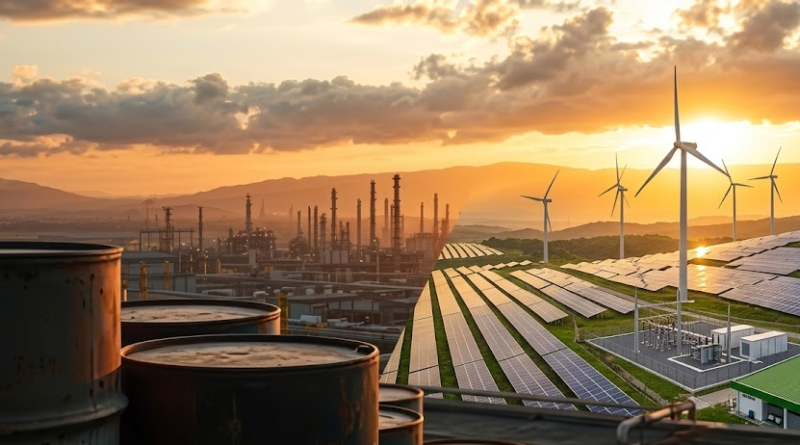
West Asia Oil Crisis the Ultimate Catalyst for Green Energy
In a week where the global economy feels like it’s being held hostage by geopolitics, UN Climate Chief Simon Stiell delivered a stinging observation from Paris: the very forces fighting to keep the world “hooked” on fossil fuels are inadvertently supercharging the greatest renewables boom in history.
As crude prices soared past $126 per barrel on Thursday, the “irony” Stiell spoke of is becoming a painful reality for consumers but a golden opportunity for the planet.
1. The “Foot on the Throat” of the Economy
With the Strait of Hormuz closed and a hot war involving the U.S., Israel, and Iran, the IEA (International Energy Agency) is now managing what chief Fatih Birol calls the “biggest energy crisis in history.”
- The Price of War: $126 oil isn’t just a number; it’s a tax on every transported good, every farm tractor, and every family budget.
- The Paradigm Shift: Turkey’s Climate Minister and COP31 president-designate, Murat Kurum, was blunt: the “energy paradigm” must transform now, not out of choice, but out of survival.
2. The “Santa Marta” Momentum
While the headlines are dominated by the war, a quiet breakthrough occurred in Colombia.
- The Stalemate Broken: Nearly 60 nations met in Santa Marta to do what COP30 in Brazil failed to do—explicitly chart a path away from planet-heating fuels.
- Coalitions of the Willing: This “coalition” is no longer waiting for global consensus. They are forging ahead with national policies that bypass the fossil fuel “trap.”
3. The Road to Antalya (COP31)
Turkey is set to host COP31 in November 2026. This summit will likely be the most consequential climate meeting since Paris 2015.
- The Mission: To take the “supercharged” interest in renewables and turn it into a binding global infrastructure plan.
- The Stakes: As Stiell noted, “We have no time to lose.” The volatility of the 2026 oil market has proven that energy security is climate security.