
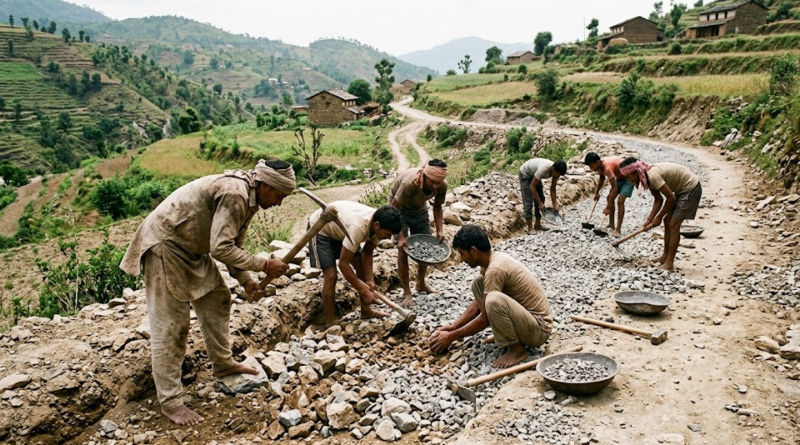
VB-G RAM G Scheme to Prioritize Poorer States
NEW DELHI — In a sweeping structural overhaul of India’s rural safety net, the upcoming Viksit Bharat-Guarantee for Rozgar and Ajeevika Mission (VB-G RAM G) is set to alter how central funds are distributed and shared.
According to newly notified draft rules, the Centre will use the 16th Finance Commission’s horizontal devolution formula to determine state allocations, a move that fundamentally tilts financial support toward larger and economically weaker states.
The new legislation is scheduled to take effect on July 1, officially replacing the 20-year-old Mahatma Gandhi National Rural Employment Guarantee Act (MGNREGA). The draft rules outline a complete transition blueprint, from rewritten funding ratios to performance-linked bonuses and governance frameworks.
The Structural Shift: MGNREGA vs. VB-G RAM G
The draft rules mark an editorial pivot away from the rights-based, demand-driven architecture of the UPA-era MGNREGA toward a structured, normative allocation model.
| Feature | Legacy System (MGNREGA) | New System (VB-G RAM G) |
| Funding Approach | Demand-based (budget stretches to match ground demand) | Normative allocation (based on formula and performance) |
| Wage Cost Sharing | 100% funded by the Central Government | Shared ratio: 60% Central / 40% State (for most states) |
| Primary Document | MGNREGA Job Card | Gramin Rozgar Guarantee Card |
Formula Favors Backward States
By tying central allocations to the 16th Finance Commission’s horizontal devolution criteria, the new model directly links rural employment funding to a state’s economic and demographic realities.
The formula uses specific weightages to balance size and economic need:
- GSDP Distance (42.5% weightage): Measures how far a state’s per capita Gross State Domestic Product falls behind the wealthiest states. This represents the single largest factor, ensuring poorer states receive the lion’s share of funds.
- Population (17.5% weightage): Utilizes 2011 Census data, directly favoring more populous states.
- Other Metrics (10% weightage each): Covers demographic performance, forest cover, geographic area, and overall contribution to Gross Domestic Product.
Performance-Linked Incentives
In a bid to enforce fiscal discipline and operational efficiency, the Centre is introducing an accountability layer. From the second year of implementation, an undisclosed percentage of a state’s allocation will be explicitly tied to strict performance criteria.
States will be evaluated on the timely payment of wages, compliance with social audit requirements, and the completion percentage of ongoing works.
Managing the Transition
To prevent a sudden disruption in rural livelihoods during the switchover, the draft rules outline several transitional guardrails:
- Project Continuity: Ongoing MGNREGA works will be allowed to continue, and pending financial liabilities will be settled under the transition provisions.
- Card Migration: Existing e-KYC-verified MGNREGA job cards will remain temporarily valid until they are systematically replaced by the new Gramin Rozgar Guarantee Cards.
- Safety Valve: New works can still be opened during the transition phase if ongoing projects cannot absorb local labor demand.
Governance of the new scheme will be centralized under a new 16-member National Level Steering Committee. Headed by the Union Rural Development Secretary, this body will oversee normative allocations and will include five state government representatives nominated by the Center to maintain federal coordination.