
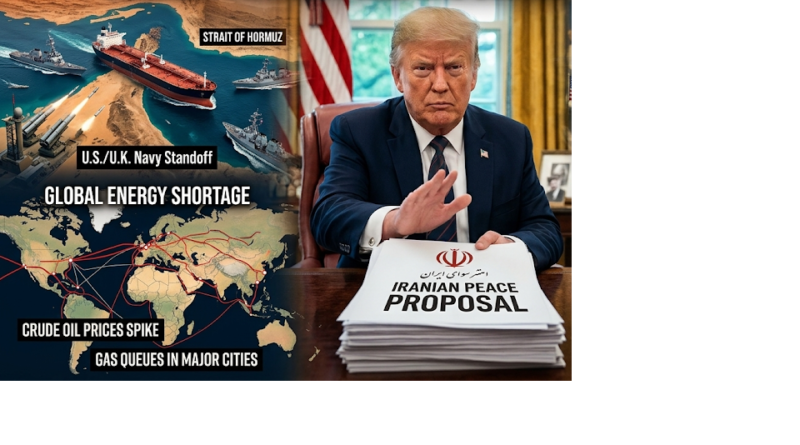
Trump Rejects Iranian Peace Proposal
WASHINGTON/TEHRAN — Hopes for a permanent resolution to the two-month-old West Asia conflict hit a major roadblock on Tuesday as U.S. President Donald Trump expressed dissatisfaction with the latest proposal from Tehran. The rejection comes as the current ceasefire remains fragile and global markets reel from the continued closure of the Strait of Hormuz.
The ‘Nuclear Delay’ Clause
The primary point of contention involves the sequencing of the peace process. According to U.S. officials, the Iranian proposal seeks to decouple the war’s end from its nuclear ambitions.
The Iranian Proposal includes:
- Postponing Nuclear Talks: Iran wants to set aside all discussions regarding its nuclear program until the war officially ends.
- Shipping Prerequisites: Tehran insists that disputes over shipping and the blockade in the Gulf must be resolved before returning to the nuclear negotiating table.
The U.S. Response: “Unhappy”
The Trump administration, which has maintained a “Maximum Pressure” policy during his two terms, reportedly views the proposal as a stalling tactic. Washington is pushing for a comprehensive deal that addresses both the immediate conflict and long-term nuclear proliferation simultaneously.
“The President is unhappy with the proposal. It does not meet the necessary benchmarks for long-term regional stability,” a U.S. official stated.
Impact on the ‘Strait of Hormuz’ Blockade
The diplomatic stalemate has immediate implications for the global economy. As long as the “shipping disputes” mentioned in the proposal remain unresolved:
- Oil Prices: Brent crude is expected to stay volatile, currently sitting 50% above pre-war levels at $111 a barrel.
- Fertilizer Shortage: The 1 million metric tonnes of urea currently stranded in the Gulf will remain inaccessible, further squeezing Indian and global farmers.
- Global Trade: One-fifth of the world’s oil supply remains effectively “locked” behind the blockade.
What’s Next?
Negotiators from the UN are reportedly scrambling to find a “middle path” to prevent the ceasefire from collapsing. However, with the U.S. demanding nuclear concessions and Iran prioritizing maritime leverage, the “diplomatic vacuum” is likely to keep energy and commodity prices high for the foreseeable future.