
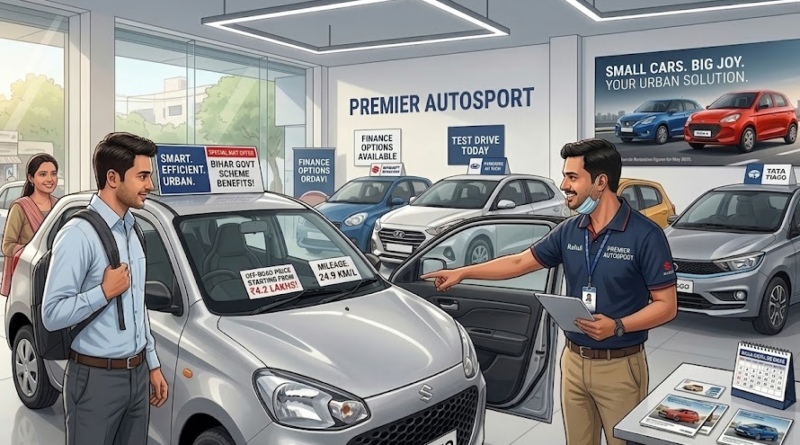
Small Cars Skyrocket as GST Cut Fuels Record-Breaking April for Carmakers
NEW DELHI — The Indian automotive sector has hit a “high-velocity” gear this April, shrugging off the shadows of the West Asia conflict to post staggering growth figures. The primary engine behind this surge? The landmark September cut in GST rates, which has finally trickled down into a massive retail frenzy.
Leading the charge is Maruti Suzuki, which clocked its highest-ever monthly volume, while double-digit growth became the “new normal” for almost every major player in the country.
The Maruti Milestone: Small Cars are Back
The country’s biggest carmaker didn’t just grow; it exploded. Maruti Suzuki sold 2,39,646 units, a 33% year-on-year jump.
- The Mini Miracle: The real story lies in the “Mini” segment (Alto, S-Presso). With the GST rate on small cars now at 18%, sales in this category skyrocketed by 154%.
- Domestic Dominance: Local sales touched an all-time high of 1.91 lakh units, proving that the Indian middle class is back in the showrooms.
The Leaderboard: April 2026 Sales Snapshot
| Manufacturer | Units Sold (Domestic) | Growth (YoY) | Key Takeaway |
| Maruti Suzuki | 1,91,122 | 35% | Highest-ever monthly domestic sales. |
| Tata Motors | 59,701 | 31% | Strong momentum in EVs and SUVs. |
| Mahindra & Mahindra | 94,627 (Total) | 14% | Utility Vehicles continue to drive the brand. |
| Hyundai India | 51,902 | 17% | Steady growth led by premium hatches and SUVs. |
| Toyota Kirloskar | 30,159 | 17% | Sustained demand for MPVs and Hybrids. |
| Nissan India | 5,388 (Total) | 75% | Highest percentage growth in the industry. |
Strategic Analysis: Why the Surge?
- The GST Tailwinds: The September GST rationalization has significantly lowered the “on-road” price for entry-level buyers. This has cleared out inventory that had been sitting stagnant for months.
- Inventory Efficiency: Most automakers reported lower inventory levels, meaning cars are moving from factories to customers almost as fast as they can be built.
- The Export Cushion: Despite domestic focus, exports remained robust. Maruti saw a 44% jump in exports, while Nissan sent nearly 40% of its production to international markets.
Impact of the West Asia Conflict
While there were fears that rising fuel costs and supply chain disruptions from the West Asia war would dampen spirit, the April numbers suggest a decoupling. Consumer sentiment in India remains shielded by the GST-led price drops, effectively neutralizing the “fear factor” of global instability for now.