
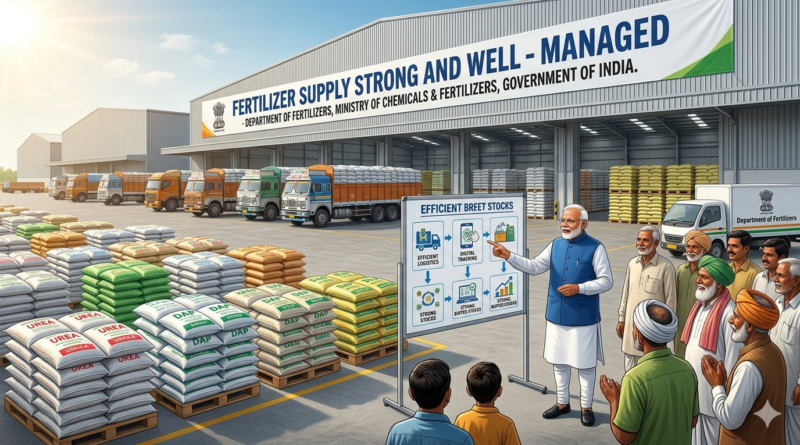
Fertilizer Supply Strong and Well-Managed, Says Ministry
NEW DELHI — Amid escalating criticism from the Opposition regarding the availability of essential commodities, the Union Fertilizers Ministry on Monday, April 27, 2026, issued a formal statement asserting that India’s fertilizer security remains “strong, stable, and well-managed.”
The Ministry’s report seeks to calm market fears and address political accusations by highlighting that current availability actually exceeds the country’s national requirements.
Surplus Stocks vs. Political Criticism
The statement comes as a direct rebuttal to various Opposition leaders who have recently targeted the Centre for allegedly failing to ensure a steady supply of both cooking gas and fertilizers. The Ministry, however, dismissed these claims as unfounded, presenting data to show a robust stock position across all states.
Key highlights from the Ministry’s report:
- Availability vs. Demand: Current fertilizer stocks are currently trending above the projected requirement for the upcoming agricultural cycle.
- Supply Chain Resilience: The Ministry noted that the logistics and distribution networks are functioning at peak efficiency to prevent any localized “artificial” shortages.
- Global Stability: Despite international market fluctuations, India has secured enough long-term contracts to ensure price and supply stability for the foreseeable future.
Impact on the Farm Sector
With the sowing season approaching in several parts of the country, the Ministry’s assurance is seen as a move to prevent panic-buying among farmers. Officials emphasized that there is no need for stockpiling at the retail level, as the “well-managed” pipeline ensures that stocks reach the cooperative and private dealers on time.
While the Opposition has linked fertilizer availability with the rising costs of cooking gas, the Ministry maintained that the two supply chains are managed independently and that the agricultural inputs remain the government’s top priority for food security.