
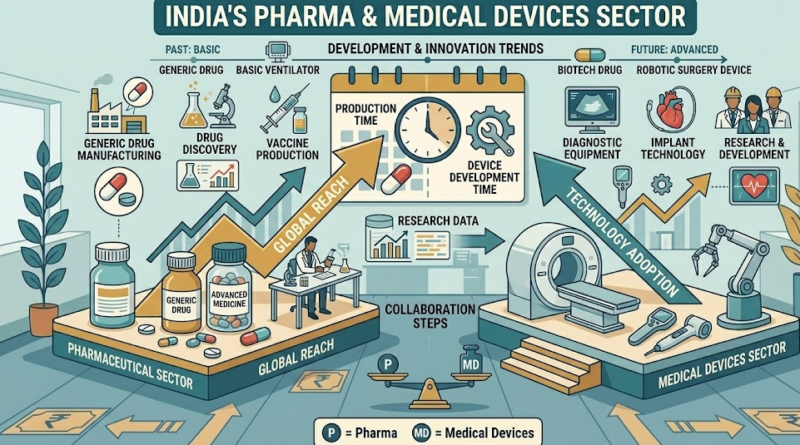
India’s “Pharma Fortress”: Govt Launches Massive Supply Chain Audit to End Import Reliance
NEW DELHI — The Department of Commerce has officially hit the “start” button on a high-stakes diagnostic of India’s most critical export engine: the Pharmaceutical and Medical Devices sector.
In what is being described as a “forensic audit” of the industrial supply chain, the government is moving to identify every hidden vulnerability that could threaten India’s title as the “Pharmacy of the World.” For newsdash.in, this marks a transition from reactive policy-making to a proactive, security-first manufacturing strategy.
The Mission: Why an Audit Now?
The Supply Chain Division of the Department of Commerce, alongside the exporters’ body Pharmexcil, is spearheading this assessment. The goal is simple but ambitious: Total Resilience.
- The Post-Pandemic Lesson: Ever since the COVID-19 pandemic exposed India’s over-reliance on Active Pharmaceutical Ingredients (APIs) from foreign markets, the government has been on a crusade to decouple from volatile global supply chains.
- The Data Goal: As Pharmexcil Director General Raja Bhanu noted, the inputs gathered will directly shape the next generation of policies aimed at boosting local “Make in India” capabilities.
The Questionnaire: What the Govt Wants to Know
Industry stakeholders are being asked to provide “under-the-hood” data on their operations. The focus is on four pillars:
- Vulnerability Mapping: Where exactly are the disruptions happening? Which logistics risks (shipping lanes, air freight costs) are the most lethal to business?
- Manufacturing Competitiveness: What is stopping a small lab in Himachal or Andhra from becoming a global giant? The survey probes into pricing pressures, global price fluctuations, and regulatory hurdles.
- The Talent Gap: It isn’t just about machines; it’s about people. The audit seeks data on staff availability, skill levels, and productivity challenges.
- Investment Barriers: What will it take to get a firm to double its local production? The government is looking for specific “support triggers” to unlock more investment.
Strategic Context: PLI and the Future
This isn’t just a data-gathering exercise; it’s the groundwork for PLI 2.0 (Production-Linked Incentive).
- Current Progress: India has already pumped billions into the PLI scheme for bulk drugs and medical devices.
- The “Gap” Strategy: The audit is designed to find the “Domestic Ecosystem Gaps”—the small, missing links in the chain that, if fixed, could make India 100% self-sufficient in life-saving drugs.
Challenges in the Crosshairs
Respondents are highlighting that the biggest hurdles aren’t always technological. They are logistical risks and market conditions.
The Reporter’s Insight: With the West Asia conflict impacting shipping routes and fuel costs rising (as seen in recent Bulk Diesel hikes), the “Logistics Risk” section of this survey will likely be the most heavily filled-out portion by exporters.