
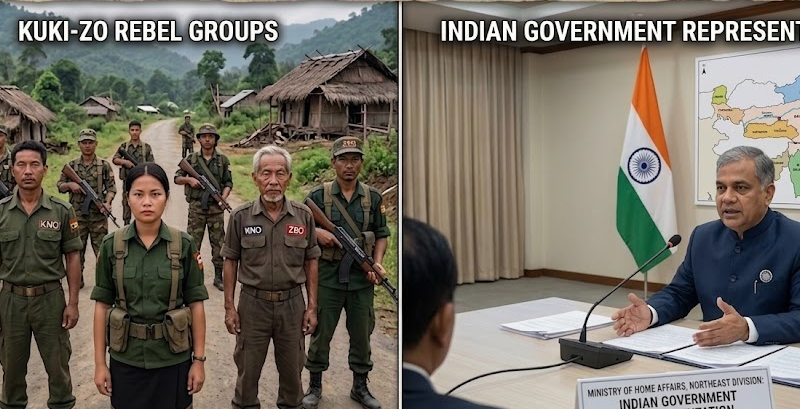
Manipur’s ‘SoO’ Silence Broken: Camps to Move as Centre Resumes Kuki-Zo Dialogue
NEW DELHI — In a move that signals a tactical shift in the management of the Manipur crisis, the Union Ministry of Home Affairs (MHA) has officially broken a two-month silence. On Friday, the high-security corridors of the capital played host to a pivotal resumption of talks with the Kuki-Zo insurgent groups, marking a “new chapter” under the recently restored state government.
For a state that has been teetering on a knife-edge for three years, this isn’t just another meeting—it’s an attempt to redesign the very security architecture of the hills.
The New Table: A First for CM Khemchand
This high-stakes engagement was the first formal dialogue involving Kuki-Zo groups since Chief Minister Y. Khemchand Singh took the oath of office on February 4.
- The Power Players: The session was chaired by A.K. Ajit Lal, the newly minted interlocutor for the Northeast and a veteran of the Intelligence Bureau.
- A Unified Front: Breaking from the friction of the past administration, senior Manipur state officials—including the Home Secretary and ADGP—sat across from the Kuki National Organisation (KNO) and United People’s Front (UPF).
The ‘Camp Relocation’ Breakthrough
The most tangible outcome of the day-long session was an agreement in principle to rationalize the Suspension of Operations (SoO) camps.
- Moving the Needle: To reduce “friction” with local populations, the government has pushed for the relocation of 7 out of the 14 existing camps.
- The Logic: By shifting these cadres away from flashpoint boundaries, the MHA hopes to minimize the village-level skirmishes that have plagued the state’s foothills.
Ukhrul: The New Ethnic Frontier
The talks weren’t just about old grievances; they were haunted by the fresh violence in Ukhrul district.
- The Naga-Kuki Clash: Kuki representatives flagged a dangerous escalation in the Naga-dominated Ukhrul region, claiming that Kuki villages have been burnt over the last month.
- Urgent Intervention: The groups demanded immediate security intervention, alleging that civilians are living in “constant fear” as the conflict expands beyond the original Meitei-Kuki divide.
The Unyielding Demand: ‘UT with Legislature’
In the post-lunch session, the tone shifted from operational security to political destiny. The delegations were clear: a return to the pre-2023 status quo is “untenable.”
- The Demand: A Union Territory (UT) with its own legislature for the hill areas.
- The Grievance: Citing a total breakdown of trust and non-accountability for the violence of the last three years, the groups argued that only political separation can ensure their security and development.
The timing of these talks is no coincidence. As Manipur approaches the three-year anniversary of the May 3 violence, the state is on high alert. By bringing the insurgent leadership to the table now, the Centre is attempting to “cool the temperature” before a symbolic date that often triggers fresh unrest.
The government is moving from “firefighting” to “management.” While relocating camps may prevent a spark, the looming demand for a Union Territory remains a massive structural challenge that New Delhi isn’t ready to answer—at least not today.