
Health Ministry Monitors Hantavirus Outbreak on MV Hondius; Two Indians Under Watch
NEW DELHI – The Union Health Ministry has confirmed that it is closely monitoring a hantavirus outbreak aboard the luxury cruise ship MV Hondius, which is currently in the Atlantic Ocean. While eight probable cases have been reported, the government has moved to reassure the public regarding the safety of Indian nationals on board.
Status of Indian Nationals
Two Indian nationals, both serving as crew members on the vessel, have been identified through International Health Regulations (IHR) channels.
- Condition: Both individuals are currently asymptomatic.
- Protocol: They are under strict observation and isolation in accordance with international health protocols.
- Location: The ship is currently en route to the Canary Islands, where it is expected to dock at the port of Granadilla for further medical assessment and safe disembarkation.
The Outbreak at a Glance
The outbreak was first reported to the World Health Organization (WHO) in early May after a cluster of passengers developed severe respiratory illness.
| Category | Count | Status/Details |
| Probable Cases | 8 | Total suspected since the voyage began in Argentina. |
| Confirmed Cases | 5 | Laboratory-confirmed via PCR testing. |
| Fatalities | 3 | Including a Dutch couple and a German national. |
| Total Passengers/Crew | 147 | Representing 23 different nationalities. |
Understanding the “Andes” Strain
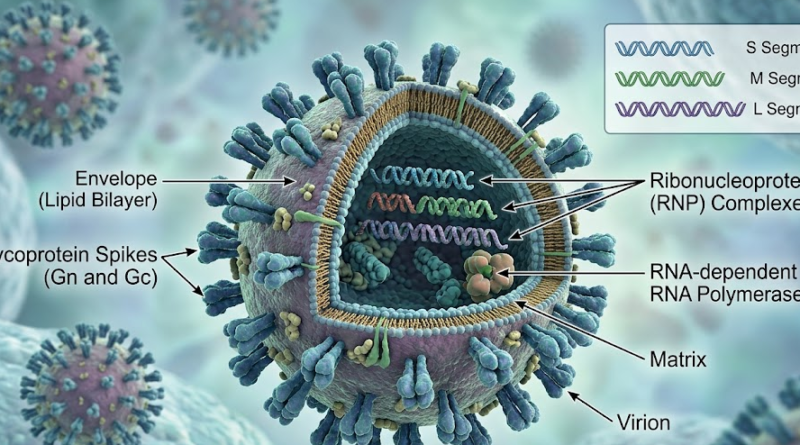
Health officials have identified the pathogen as the Andes strain of hantavirus. This specific strain is particularly noteworthy for its biological characteristics:
- Human-to-Human Transmission: Unlike most hantaviruses, which are transmitted solely via rodent droppings or urine, the Andes strain has shown a limited ability to spread between humans through close, prolonged contact.
- Incubation Period: Symptoms typically appear 1 to 8 weeks after exposure, which is why asymptomatic individuals (including the two Indians) must remain under prolonged observation.
- Severity: If it progresses, the infection can cause Hantavirus Cardiopulmonary Syndrome (HCPS), characterized by rapid respiratory failure.
India’s Preparedness and Response
The Union Health Ministry has activated its surveillance network to manage any potential spillover risk:
- Agency Coordination: The National Centre for Disease Control (NCDC) and the Integrated Disease Surveillance Programme (IDSP) are leading the monitoring effort.
- High-Level Review: A specialized review meeting was recently convened by the Public Health Emergency Operations Centre (PHEOC) to assess India’s clinical readiness.
- WHO Partnership: India is working directly with the WHO under the IHR framework to ensure safe onward travel arrangements once the crew members are cleared.
Official Stance: The WHO currently assesses the global public health risk as low. However, because the virus has a long incubation period, officials remain vigilant for any late-onset symptoms among the 147 people on board.