
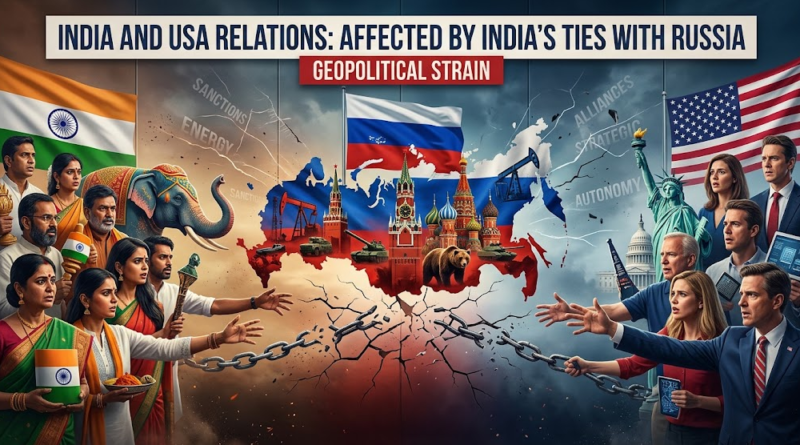
United States Tariff Threat Masquerading as Strategy
The United States Senate has sent a blunt message to countries still buying Russian oil: Washington is prepared to turn economic pressure into commercial punishment. By passing the Lindsey O. Graham Sanctioning Russia and Iran Act of 2026 by an overwhelming 86–11 vote, the Senate has revived the prospect of tariffs as high as 100 per cent on imports from countries that continue to purchase Russian energy.
The Bill is not yet law. It must still clear the House of Representatives. But its passage in the Senate is significant—not merely because of the size of the proposed tariff, but because it reveals how quickly the Ukraine sanctions regime is moving from targeted restrictions to sweeping secondary penalties.
The stated objective is familiar: to deprive Vladimir Putin of the revenues that finance Russia’s war in Ukraine. The proposed legislation would target Russia’s political leadership, financial institutions, energy sector and sanctions-evasion networks. Yet the mechanism under consideration risks punishing not only the intended actor, but also major trading partners whose energy choices are shaped by geography, price and national necessity.
India is particularly vulnerable. Under the Bill, a 100 per cent tariff could be imposed on goods from a country that ranks among the five largest importers of Russian crude oil or natural gas and continues importing that energy after 30 days of the Act’s enactment. India, along with China, is among the largest buyers of Russian crude. Russian oil accounted for more than 40 per cent of India’s crude imports in May 2026 and over 50 per cent in June, according to the figures cited in the Senate documents.
That dependence cannot be unwound by legislative stopwatch. India’s refiners may diversify their purchases, but replacing a substantial share of Russian crude within 30 days is not a commercial adjustment; it is a logistical and strategic upheaval. The challenge is made more acute by continuing constraints on shipping through the Strait of Hormuz. A policy that assumes energy markets can be rearranged as easily as tariff schedules risks confusing political urgency with economic realism.
India’s exposure under the Bill’s second criterion appears less immediate. Tariffs could also target countries identified as among the top five facilitators of Russian oil sanctions evasion. Indian oil marketing companies have repeatedly maintained that their purchases comply with applicable sanctions. That distinction matters. Buying discounted crude is not, by itself, proof of sanctions evasion. A serious sanctions regime must separate lawful trade from deliberate concealment, re-export and circumvention.
The proposed tariff would nevertheless place India in an uncomfortable position. A 100 per cent levy would be imposed on Indian goods entering the American market, on top of the 10 per cent tariff currently in force. The measure would therefore function less as a narrowly calibrated sanction than as a broad tax on Indian exports—affecting businesses and workers far removed from the Russian energy trade.
There is also a larger question of proportionality. If the goal is to reduce Russia’s oil revenues, indiscriminate tariffs on a country’s entire export basket may be a blunt instrument. They could invite retaliation, disrupt American supply chains and weaken the very partnerships Washington needs if it wants a durable coalition against Moscow. Sanctions are most effective when they are precise, credible and enforceable. Their force diminishes when they appear to punish strategic partners for making difficult choices in a fractured global energy market.
India should not underestimate the seriousness of the Senate vote. Nor should it respond with theatrical defiance. New Delhi must intensify its diplomatic engagement with Washington, document the compliance of its refiners, clarify the legal basis of its purchases and accelerate—but not panic over—energy diversification. The objective should be to establish that Indian commerce is not a vehicle for sanctions evasion while preserving the country’s room to protect its energy security.
The United States, for its part, must recognise that pressure on India is not pressure on Russia. A tariff that threatens Indian exports may produce headlines in Washington, but it will not automatically stop Russian oil from reaching the global market. It may instead push major economies towards alternative payment systems, trading arrangements and diplomatic alignments.
The Senate vote is therefore more than a procedural milestone. It is a warning about the new costs of geopolitical neutrality—and a test of whether economic statecraft can remain disciplined when political impatience demands maximum punishment. Before the Bill becomes law, both Washington and New Delhi should ask a simple question: will a 100 per cent tariff isolate Russia, or merely make the world’s already divided energy system more unstable?