
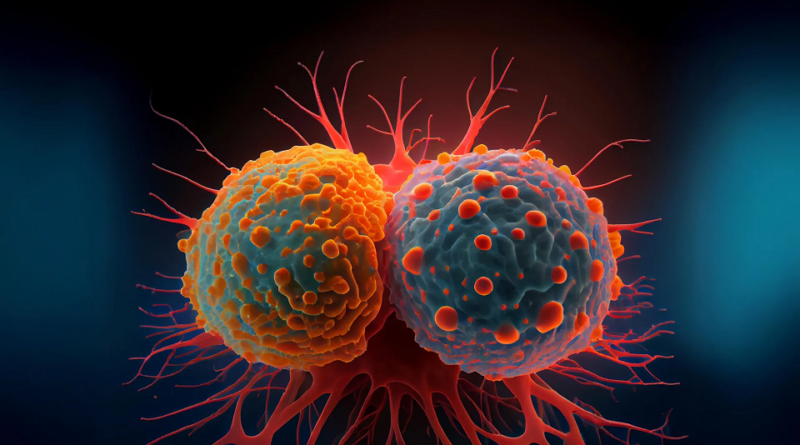
Science Breakthrough: New ‘HIT’ Receptors May Unmask ‘Invisible’ Cancer Cells
NEW YORK — A groundbreaking study published in the journal Science has revealed a major flaw in how we currently fight solid tumors—and a revolutionary way to fix it. Researchers from Columbia University and the Sloan Kettering Cancer Center have developed a new type of immune cell that can detect “hidden” cancer proteins, potentially offering a cure for stubborn cancers like kidney, ovarian, and pancreatic tumors.
The Problem: The ‘Patchwork’ Tumor
For years, CAR T-cell therapy—where a patient’s own immune cells are engineered to hunt cancer—has worked wonders for blood cancers like leukemia. However, it often fails against solid tumors due to Antitrust Heterogeneity.
Tumors are like a patchwork quilt: some cells show the “target” protein, while others appear to lack it. Current CAR-T cells only kill the visible targets, allowing the “invisible” cells to survive and regrow the tumor.
The Discovery: ‘Pseudo-Heterogeneity’
The new study suggests these cells aren’t actually invisible; they are just “dim.”
- The Target: Researchers focused on a protein called CD70, found in 70-80% of kidney and ovarian cancers.
- The “Dimmer Switch”: They discovered that an enzyme called EZH2 suppresses the CD70 protein to such low levels that standard lab tests (and current CAR-T cells) cannot see them.
- The Survival Tactic: Cancer cells keep these tiny amounts of protein because they need them to stay alive—a phenomenon the researchers call “pseudo-heterogeneity.”
The Solution: The HIT Receptor
To find these “dim” cells, the team moved away from synthetic CAR designs and created the HLA-independent T-cell (HIT) receptor.
| Feature | Traditional CAR-T | New HIT Receptor |
| Sensitivity | Needs a “Strong Signal” (many proteins) | Detects “Faint Signals” (very few proteins) |
| Mechanism | Uses synthetic molecular triggers | Uses the T-cell’s natural activation system |
| Targeting | Requires an HLA “ID tag” | Bypasses HLA system for direct detection |
Results: Total Eradication
When tested in “xenograft” models (human tumors grown in mice), the results were stark:
- Traditional CAR-T: Shrank the tumors initially, but the “invisible” cells survived and the cancer returned.
- HIT Receptors: Successfully detected the faint signals, eliminated the hidden cells, and led to complete and lasting tumor eradication in kidney, ovarian, and pancreatic cancer models.
Safety: The ‘Goldilocks’ Challenge
The main concern with ultra-sensitive T-cells is “off-target” attacks on healthy cells. However, researchers found that the target protein (CD70) is largely absent in vital organs like the heart, lungs, and brain. While the cells did briefly attack some normal immune cells, the effect was temporary and manageable. Future human trials will likely include “kill switches” so doctors can turn the cells off if side effects occur.