
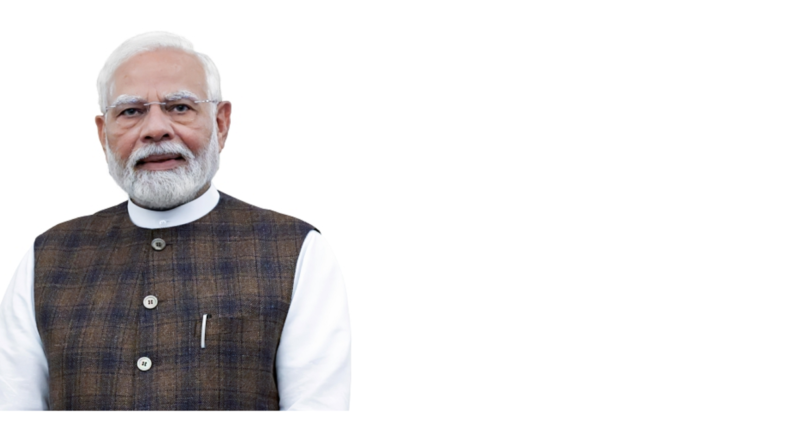
PM Modi Surpasses Nehru to Become India’s Longest Serving Elected Prime Minister
NEW DELHI — On June 10, Narendra Modi officially becomes the longest serving elected Prime Minister in post-Independence India, shattering a record held for decades by the nation’s foundational architect, Jawaharlal Nehru. To a mathematician, the number 4,399 is just an arbitrary digit nestled between odds and evens. But to chroniclers of Indian democracy, it marks a historic watershed.
As the National Democratic Alliance (NDA) marks 12 years at the helm this week, this milestone offers a profound moment to examine a tenure that has fundamentally reordered the DNA of Indian polity.
Longest Serving Elected Prime Minister: Deciphering the Record
To understand the significance of June 10, one must look at the fine print of India’s constitutional history. While Jawaharlal Nehru occupied the Prime Minister’s office for nearly 17 years, his first five years (1947–1952) were spent heading an interim government before general elections were institutionalized. Nehru’s tenure as a democratically elected leader began in 1952.
By clocking 4,399 days of continuous, elected governance, PM Modi surpasses Nehru’s post-1952 elected streak. Meanwhile, Indira Gandhi’s formidable 14-year imprint on the nation remains disqualified from this specific record due to its fractured nature, split by her years out of power.
Beyond Statistics: Reimagining the Indian Polity
However, veteran political observers argue that reducing this moment to mere calendar squares misses the larger picture.
“Milestones do not define an epoch of transformation,” notes Ajay Singh, former press secretary to Presidents Ram Nath Kovind and Droupadi Murmu. “The milestone of surpassing the record of former Prime Minister Nehru is remarkable, yet Prime Minister Modi will be remembered less for statistics and more for reimagining India’s politics in the most profound way.”
Singh argues that while direct comparisons between Prime Ministers are often redundant—given that each leader is a product of their unique historical context—Modi’s 12 years cannot be viewed as a mere continuation of the status quo. Instead, it has been an era where long-held political dogmas, structural “givens,” and institutional complacencies were systematically dismantled.
Shattering the “Givens”
From welfare delivery overhauls to a muscular foreign policy and a redefined cultural narrative, the Modi doctrine has forced both allies and adversaries to play on a completely altered political chessboard. In the arena of pure power politics, he stands as arguably the most consequential and transformative leader India has seen in generations.
As the celebrations settle, history will ultimately take its time to weigh the long-term legacy of the Modi era. But as of this week, the numbers speak for themselves. The milestone of 4,399 days is now deeply woven into the fabric of the NDA’s 12-year anniversary—a testament to a decade-plus of political dominance that has reshaped modern India.