
NFHS-6 Data Released: India Records Major Gains in Child Health and Maternal Care Post-Pandemic
NEW DELHI: India has registered significant improvements across core maternal and child health metrics in the post-pandemic era, driven by a surge in institutional deliveries, better vaccination coverage, and a notable drop in child malnutrition.
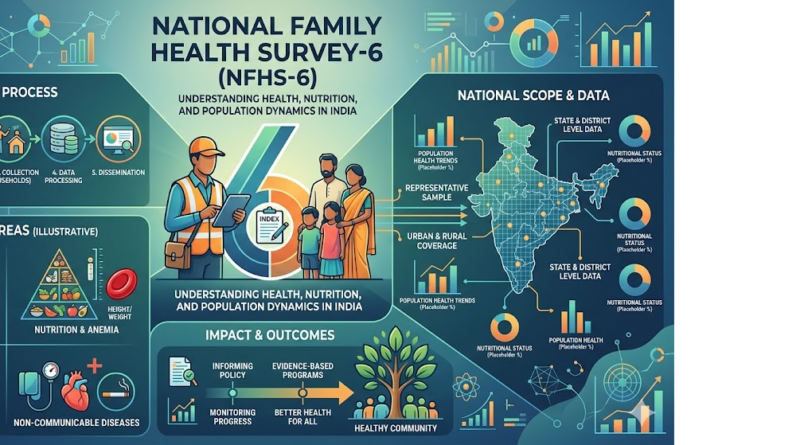
The findings, released Friday by the Health Ministry, stem from the highly anticipated National Family Health Survey-6 (NFHS-6), conducted in 2023 and 2024 in collaboration with the International Institute for Population Sciences. As the first major demographic survey since the COVID-19 pandemic, the data offers a reassuring picture of India’s rebounding public health infrastructure, though it raises fresh alarms regarding lifestyle diseases and a sharp spike in surgical deliveries.
Key Health Indicators at a Glance
The survey outlines steady progress across several major health and nutrition parameters compared to the previous NFHS-5 round (2019-2021).
| Health Indicator | Previous (NFHS-5) | Current (NFHS-6) |
| Institutional Deliveries | 88.6% | 90.6% |
| Child Stunting (Under 5) | 35.5% | 29.3% |
| Severe Child Wasting | 7.7% | 5.2% |
| Full Vaccination (12-23 mos) | 83.8% | 87.1% |
| Contraceptive Prevalence | 66.7% | 69.1% |
Child Health and Nutrition: Turning the Tide
One of the most encouraging takeaways from the NFHS-6 is the tangible reduction in child malnutrition. Stunting among children under five—a critical marker of chronic undernutrition—fell by more than six percentage points. The survey also noted a marginal dip in underweight children, settling at 31.8%.
Childhood vulnerabilities to common illnesses have also eased. Symptoms of acute respiratory infections among children dropped to 1.9% (down from 2.8%), and the prevalence of severe diarrhoea fell to just 0.5%. Furthermore, infant feeding practices remain robust, with 95.6% of infants under six months being exclusively breastfed.
The C-Section Boom: A Growing Concern
While maternal care access has expanded dramatically—with 95.9% of pregnant women now receiving antenatal care—the survey flagged a concerning shift in how Indian women are giving birth.
The national rate of caesarean section deliveries surged from 21.5% to 27.2%. In urban areas, this figure stands at a staggering 40%, far exceeding the World Health Organization’s recommended optimal threshold of 10% to 15%.
The data indicates that this spike is heavily concentrated in specific states and predominantly driven by private healthcare facilities, highlighting a potential over-medicalization of childbirth.
On the positive side of maternal health, nutritional interventions are gaining ground. The percentage of mothers consuming iron-folic acid supplements for at least 100 days during pregnancy rose to 54.9%, up from 44.1% in the previous cycle. India’s Total Fertility Rate (TFR) also held steady at 2.0, successfully remaining just below the demographic replacement threshold of 2.1%.
Universal Immunization and Hygiene
The NFHS-6 highlights sweeping successes in India’s universal immunization programs, heavily shouldered by the public sector. An overwhelming 95.6% of children received their core vaccinations through public health facilities.
Targeted vaccine drives have yielded massive dividends:
- Rotavirus vaccine coverage skyrocketed from 36.4% to 85.4%.
- The second dose of measles-containing vaccines jumped from 58.6% to 71.8%.
Additionally, the survey noted a steady, albeit slow, improvement in female personal hygiene, with the use of hygienic menstrual protection among young women (aged 15-24) rising to 79.2%.
The Road Ahead: The “Dual Burden”
Despite the triumphs in maternal and infant care, the Health Ministry’s report did not gloss over India’s evolving epidemiological challenges. The NFHS-6 explicitly flagged the rising tide of non-communicable diseases (NCDs) and lifestyle-related risks. Policymakers are now forced to confront a “dual burden”—battling persistent pockets of undernutrition while simultaneously addressing a rising crisis of adult obesity across the country.