
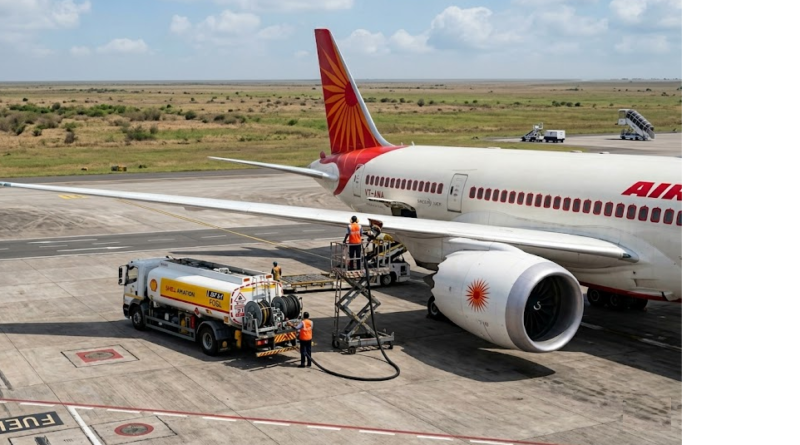
Govt Rolls Out ₹10,000-Crore Fuel Shield to Keep Fares Grounded Amid West Asia Crisis
NEW DELHI — In a major intervention to prevent airfares from skyrocketing and airlines from bleeding cash, the Union Cabinet has greenlit a ₹10,000-crore lifeline to cushion India’s aviation sector against the severe turbulence of global oil markets.
Triggered by the escalating conflict in West Asia, international jet fuel prices have surged to punishing levels, threatening to ground flights and pass crippling costs onto passengers. To avert this, the government on Wednesday approved a one-time budgetary advance to state-run Oil Marketing Companies (OMCs), establishing a dedicated Aviation Turbine Fuel (ATF) Price Stabilisation Fund.
The mandate is clear: stabilize operating costs for scheduled domestic and international carriers, protect consumers from sudden fare spikes, and offer breathing room to an industry deeply vulnerable to geopolitical shocks.
The Trigger: A 135% Price Shock
The immediate catalyst for this intervention is a staggering spike in international jet fuel rates. Between March and May, global ATF prices multiplied nearly two-and-a-half times, rocketing from ₹60.50 to a punishing ₹142 per litre.
For airlines, fuel is the ultimate financial barometer. In normal conditions, ATF accounts for about 40% of an airline’s operating expenses. During periods of extreme volatility like the current West Asia crisis, that figure can balloon to 60%, rapidly eroding profitability.
The pressure had already begun to crack the system. Faced with unsustainable fuel bills, major carriers including Air India, its low-cost subsidiary Air India Express, and market leader IndiGo preemptively slashed a combined 250 daily domestic flights starting this June. Without intervention, this reduction in capacity would have inevitably triggered a sharp, immediate hike in ticket prices for the flying public.
How the Stabilisation Fund Works
To halt the crisis, the government has capped ATF prices for domestic scheduled carriers at ₹75.6 per litre—a rate that has remained frozen since an initial 9% hike on April 1. However, this cap left state-run OMCs absorbing a massive blow, incurring an under-recovery of ₹30 on every litre of ATF sold to domestic airlines, according to Petroleum Ministry officials.
The newly approved ₹10,000-crore fund aims to plug this hole while keeping airlines afloat. Here is the operational blueprint of the bailout:
- Interest-Free Advances: The budgetary support will be funneled to OMCs as interest-free advances, allowing them to absorb the shock of elevated international crude prices without stalling supplies.
- A “Revolving” Mechanism: The government has designed the fund to be self-sustaining. Once the geopolitical dust settles and international ATF prices moderate below the benchmark, the differential amount will be recovered from the OMCs and returned to the national exchequer.
- The 3-Year Lock-in: The arrangement will be legally bound by a Memorandum of Understanding (MoU) between the OMCs and participating airlines. Crucially, airlines opting into the stabilization shield will be mandated to procure their jet fuel exclusively from these OMCs for up to three years, or until the advance amount is fully recovered by the government.
Shielding the Consumer
Union Petroleum Minister Hardeep Singh Puri emphasized the consumer-centric nature of the policy. In a statement posted to social media, Puri noted that the fund would “prevent disruption of airline operations while protecting air passengers from fare spikes driven by the geopolitical conflict involving several energy producers.”
By backstopping the OMCs, the government has effectively chosen to subsidize the volatility rather than letting the free market dictate fares during a period of geopolitical force majeure.
For the average flyer, the intervention means that summer and monsoon travel plans may be spared from exorbitant ticket prices. For India’s aviation sector, it offers a crucial runway to navigate one of the most severe supply-side energy shocks in recent years.