
Gen-Z PM Shatters Taboo with Admission of Nepali Encroachment on Indian Soil
KATHMANDU — In a stunning departure from decades of carefully calibrated anti-India rhetoric, Nepal’s newly minted Prime Minister, Balendra Shah, dropped a geopolitical bombshell on the floor of Parliament Sunday afternoon.
The 36-year-old former rapper and structural engineer turned heads—and ignited a political firestorm—by publicly admitting that Nepal has encroached upon Indian territory. The admission is believed to be the first time a sitting Nepali head of government has made such a statement on record.
“I Learned Only Recently”
The explosive remarks came during Shah’s highly anticipated maiden address to Parliament. Swept to power on a tidal wave of youth support following last September’s “Gen Z protests,” the leader of the centrist Rastriya Swatantra Party (RSP) had previously drawn sharp criticism for dodging House sessions since taking office on March 27.
When finally forced to answer an opposition query regarding the perennially tense, disputed Kalapani border region, the Prime Minister discarded the standard diplomatic script.
“You might find it strange, but I also learned only recently—after becoming Prime Minister—that it is not just India, but Nepal too has encroached upon Indian territories in many places,” Shah told a stunned House.
The reaction was instantaneous. The chamber descended into an uproar as furious opposition lawmakers jumped to their feet, shouting down the Prime Minister and demanding a swift retraction.
Opposition Unleashes Fury, Fears for “National Integrity”
Traditional political heavyweights, reeling from their landslide defeat by Shah’s upstart party, wasted no time weaponizing the rookie PM’s blunt honesty.
Mainstream parties viewed the comment not as refreshing transparency, but as a dangerous diplomatic blunder that compromises Kathmandu’s leverage over New Delhi.
- Nepali Congress: Chief Whip Basana Thapa led the charge, demanding the comments be completely expunged from the official parliamentary record. “Where exactly has this happened? The Prime Minister must make the House aware… This is a serious and objectionable statement,” Thapa demanded.
- Nepal Communist Party: Lawmaker Ramesh Malla warned that Shah’s rookie candor could cause permanent damage. “The Prime Minister’s remarks could damage national integrity,” Malla warned.
As the political heat reached a boiling point, Nepal’s Foreign Ministry scrambled to issue a late-night damage-control clarification. They argued the Prime Minister wasn’t conceding formal territories like Kalapani, but was instead referring to localized, minor agricultural or civil scale-overs in the Dasgaja (the generic “no-man’s land”) border strip.
The Grand Geopolitical Calculus
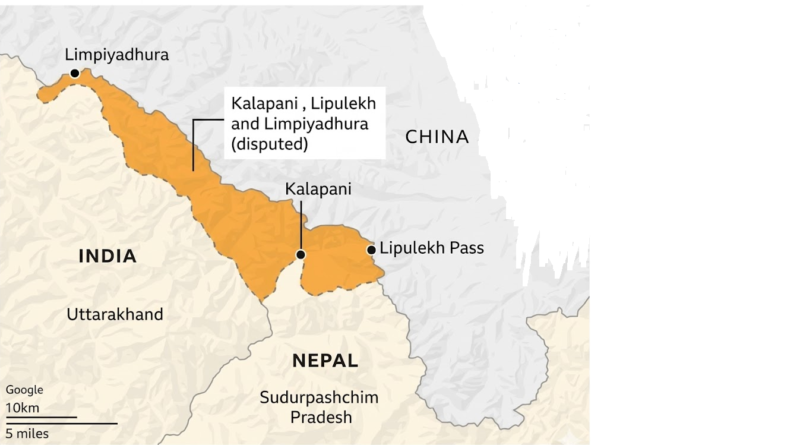
The timing of this diplomatic rupture could not be more delicate. The long-simmering border dispute over the strategic tri-junction areas of Lipulekh, Limpiyadhura, and Kalapani—which India maintains are parts of Uttarakhand—resurfaced with a vengeance after New Delhi announced the revival of the Kailash Manasarovar Yatra pilgrimage route via Lipulekh.
Shah revealed Sunday that his administration has already fired off diplomatic notes to both New Delhi and Beijing, and has even reached out to the United Kingdom, arguing that London needs to mediate a mess that dates back to the drawing of boundaries by British India under the 1816 Sugauli Treaty.
By publicly stating that border violations flow in both directions, the anti-establishment PM has fundamentally disrupted Nepal’s traditional nationalist bargaining position. Whether this is the tactical genius of a political outsider trying to force a clean slate with India, or the catastrophic naivety of a leader who spent more time in recording studios than diplomatic briefing rooms, is a question that will dominate the Himalayan nation for months to come.