
Trump Signals Massive Troop Withdrawal from Germany
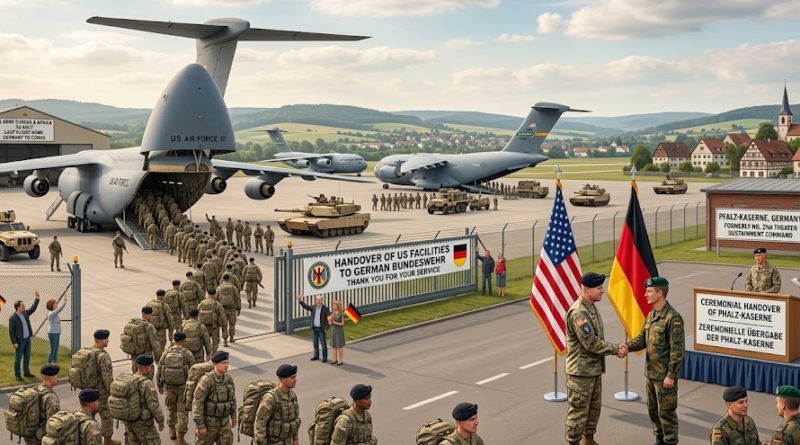
PALM BEACH, FLORIDA — In a move that has sent tremors through the NATO alliance, U.S. President Donald Trump announced on Saturday that the United States will proceed with a “significant” reduction of its military footprint in Germany. This escalation follows a Friday announcement by the Pentagon to withdraw 5,000 troops, a figure the President now says is just the beginning.
The decision marks a sharp departure from decades of post-WWII security policy and places a direct strain on the relationship between Washington and the newly installed German Chancellor, Friedrich Merz.
“Cutting Way Down”: Beyond the Initial 5,000
While the Pentagon’s initial plan involved the relocation or return of 5,000 personnel, President Trump’s Saturday remarks suggests a much broader retreat.
- The Statement: “We’re going to cut way down. And we’re cutting a lot further than 5,000,” Trump told reporters in Florida.
- The Lack of Rationale: When pressed for the strategic reasoning behind the move—whether it was based on cost-sharing, a shift toward the Indo-Pacific, or a diplomatic rift—the President offered no specific explanation.
The NATO & Merz Conflict
The withdrawal comes at a sensitive time for European security. Chancellor Friedrich Merz, who took office with a mandate to strengthen the Euro-Atlantic bond, now finds himself at the center of a “Maximum Pressure” campaign from the White House.
- The Spending Dispute: Historically, Trump has criticized Germany for failing to meet the NATO target of spending 2% of GDP on defense, famously labeling Germany “delinquent” during his previous term.
- The Strategic Vacuum: Experts warn that a massive U.S. withdrawal could leave a security gap in Central Europe, potentially emboldening adversaries and forcing a rapid, costly rearmament of the Bundeswehr (German Armed Forces).
Ramifications for the U.S. Military in Europe
Germany serves as the primary hub for U.S. operations in Europe, Africa, and the Middle East.
- Key Bases at Risk: Any “significant” reduction could impact Ramstein Air Base (a critical logistics hub) and Landstuhl Regional Medical Center (the largest U.S. military hospital outside the States).
- The “Poland Alternative”: There is ongoing speculation that some withdrawn troops could be stationed in Poland, which has expressed a willingness to pay for a permanent U.S. presence, further complicating the internal dynamics of the European Union.
For decades, the U.S. presence in Germany has been the “anchor” of European stability. By moving to pull “a lot further than 5,000” troops, the Trump administration is effectively telling Europe that the anchor has been lifted. For Chancellor Merz, this is a trial by fire; for the rest of the world, it is a signal that the U.S. is increasingly looking inward.