
India’s Industrial Growth Hits 23-Month High of 7.3% in June 2026
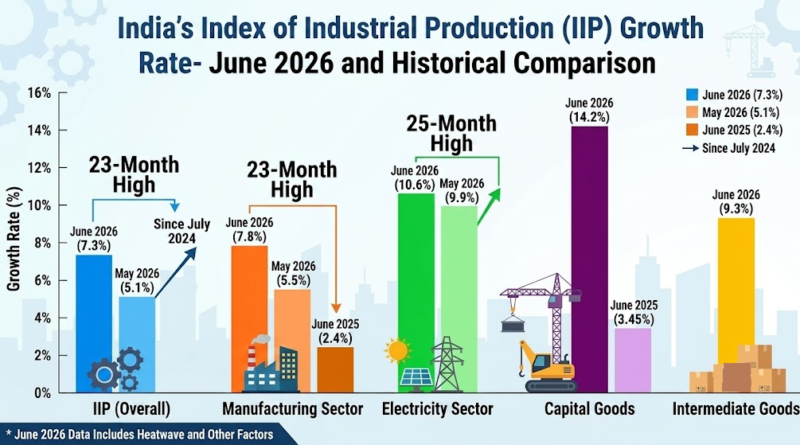
India’s industrial growth accelerated to 7.3% in June 2026. This is Driven by strong performances in manufacturing, electricity, and capital goods. According to official data released by the Ministry of Statistics and Programme Implementation (MoSPI), reaching its highest level in nearly two years (23 months).
Key Growth Drivers & Sectoral Performance
- Overall IIP Acceleration: The Index of Industrial Production (IIP) grew at 7.3% in June 2026, up significantly from 5.1% in May 2026, marking the fastest pace of expansion since July 2024.
- Manufacturing Surge: The manufacturing sector expanded at a 23-month high of 7.8% in June 2026 (compared to 5.5% in May 2026 and 2.4% in June 2025).
- Electricity & Power Demand: Widespread heatwaves across the country pushed growth in electricity and gas supply to a 25-month high of 10.6% (up from 9.9% in May).
- Capital & Intermediate Goods:
- Capital Goods: Surged to 14.2% in June 2026, compared to just 3.45% in June last year, signaling steady execution of capital expenditure.
- Intermediate Goods: Registered a robust 9.3% growth, supporting near-term supply chain stability.
Expert Commentary
“The sharp uptick reflects broad-based strength in industrial activity, supported by improving manufacturing output, resilient domestic demand, and sustained momentum in investment-led sectors.”
— Shashwat Singh, Fundamental Analyst at Bajaj Broking
“While this reflects steady capital expenditure execution, our forward-looking credit outlook adopts a cautious stance… the broader macroeconomic landscape is clouded by significant risks.”
— Vikrant Chaturvedi, Associate Director at Brickwork Ratings
Key Risks & Outlook Ahead
Despite the strong June performance, analysts advise caution regarding the months ahead due to two primary headwinds:
- Monsoon Deficit: A lower-than-expected or below-normal monsoon poses a direct threat to rural consumption while exerting upward pressure on food inflation.
- Geopolitical Tensions: Ongoing conflict and regional volatility in West Asia continue to fuel crude oil price fluctuation, impacting input costs and trade stability.