
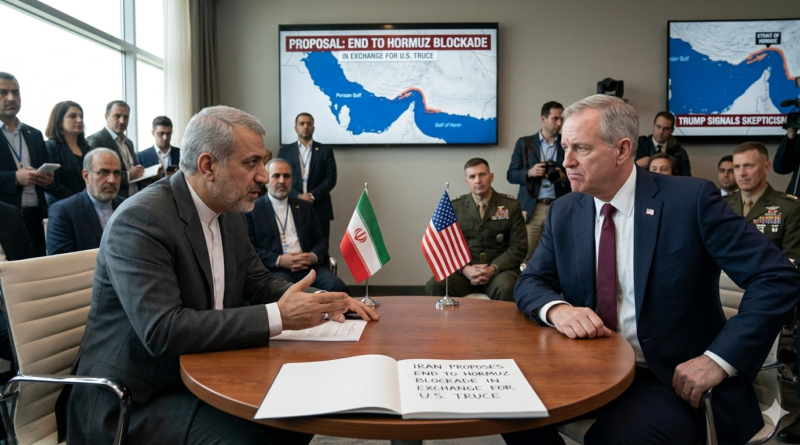
The Price of Peace: Decoding the Leaked $300 Billion U.S.-Iran Framework Agreement
A stunning diplomatic breakthrough has emerged from the shadows of a brutal conflict. According to a leaked 14-point U.S.-Iran framework agreement published by Saudi Arabia’s Al Arabiya network and Bloomberg, Washington and Tehran have charted a high-stakes roadmap toward a permanent ceasefire.
The memorandum of understanding (MoU), scheduled to be signed in Geneva this Friday, represents a monumental shift in geopolitical strategy. It transitions the two nations away from active hostilities and into a structured, albeit highly fragile, negotiating window.
The Grand Bargain: Economy for Compliance
At the heart of this leaked draft is an extraordinary exchange of economic lifelines for security guarantees. The United States has committed to unlocking restricted infrastructure, while Iran has doubled down on its non-proliferation rhetoric.
Key Pillars of the Framework:
- The $300 Billion Package: The U.S., alongside regional partners, will facilitate a massive $300 billion economic development and rehabilitation plan for Iran.
- Asset Release: Washington has agreed to facilitate the release of frozen Iranian assets, tightly tying their full availability to progress toward a finalized peace treaty.
- Immediate Sanctions Relief: During the interim negotiation period, the U.S. will lift stifling restrictions on Iranian crude oil, petrochemical products, and critical financial services, including banking.
- The Non-Nuclear Pledge: Iran has re-pledged never to produce nuclear weapons. While the draft dictates a baseline status quo for Iran’s nuclear infrastructure, top-tier sources indicate that Tehran has also agreed to downblend (dilute) its existing stockpiles of highly enriched uranium under the direct watch of the International Atomic Energy Agency (IAEA).
Unclogging the Global Energy Artery: The Strait of Hormuz
The conflict, which erupted with a U.S.-led bombing campaign on February 28, severely disrupted global commerce. This agreement directly targets that economic wound by systematically reopening the Strait of Hormuz.
| Action Item | Responsible Party | Operational Timeline |
| Lifting Naval Blockade | United States | Immediate effect upon signing |
| Mine Clearance & Technical De-escalation | Iran | Continuous implementation |
| Restoration of Pre-War Traffic Volumes | Joint Execution | Within 30 days of signing |
While U.S. President Donald Trump has publicly claimed that passage through the critical waterway will be completely toll-free, Iran’s Foreign Ministry has clarified its intent. Tehran will technically not charge a standard commercial transit toll, but ships will be required to pay a mandatory fee to the newly established Persian Gulf Strait Authority to fund environmental upkeep and maritime services.
The Regional Flashpoints: Lebanon and the Spectre of Spoilers
Perhaps the most fragile element of the agreement is its sweeping mandate for an “immediate and permanent end to the war on all fronts, including Lebanon”.
While the direct U.S.-Iran bombing campaigns fell silent following an April 8 ceasefire, Lebanon has remained a volatile proxy battlefield. The draft forces a head-on collision with regional realities:
- The Israeli Stance: Israeli Prime Minister Benjamin Netanyahu has adamantly stated that his troops will not withdraw from occupied pockets of Lebanese territory.
- The Hezbollah Resistance: Mirroring Israel’s defiance, Hezbollah—which maintains deep strategic ties with Tehran—has vowed to continue actively resisting Israeli military presence.
Without complete buy-in from these heavily armed local actors, the clause guaranteeing “territorial integrity and non-interference” faces an uphill battle from day one.
Trump’s Rhetorical Retraction
This framework agreement highlights an extraordinary ideological pivot by President Donald Trump. When the war was launched in late February, the White House was subtly but clearly beating the drums of regime change, openly urging the Iranian public to overthrow their institutions.
Fast forward to the June 15 MoU announcement, and the narrative has shifted completely: Trump now states he does not believe in regime change. However, no one should mistake this pragmatism for absolute pacifism. By explicitly warning that he will “resume the war” if Tehran fails to honor its downblending and monitoring obligations, Trump has made it clear that this $300 billion carrot is backed by a very familiar stick. The core issues—such as Washington’s demand for “zero enrichment” versus Tehran’s insistence on its sovereign nuclear rights—have merely been kicked down the road to the next phase of negotiations. Friday’s signing in Geneva is not the end of the conflict; it is simply the beginning of a grueling diplomatic chess match.
Given the immense friction surrounding Israel’s stance in Lebanon and the unresolved debate over Iran’s permanent right to enrich uranium, do you think this preliminary framework can successfully evolve into a lasting peace treaty, or is it merely a temporary pause in a larger conflict?