
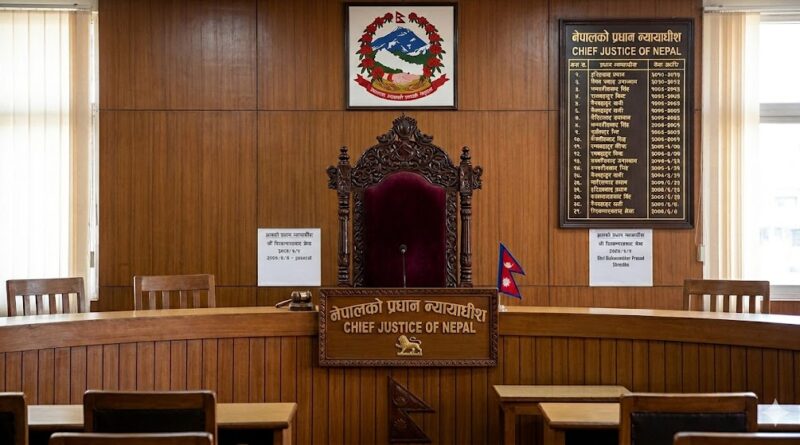
Nepal’s Democracy in the Crosshairs: The Battle for the Chief Justice’s Robe
Nepal’s democratic institutions are currently locked in a high-stakes standoff. What began as a dispute over a legislative ordinance has spiraled into a full-blown conflict between the executive and the judiciary, centering on one of the most controversial judicial recommendations in the country’s history.
The catalyst? The decision to bypass Acting Chief Justice Sapana Pradhan Malla in favor of Manoj Sharma, a junior judge currently ranked fourth in seniority, for the position of Chief Justice.
Breaking a 70-Year Tradition
In Nepal, while not strictly written in stone, a seven-decade-old tradition has dictated that the senior-most justice of the Supreme Court ascends to the role of Chief Justice. By recommending Mr. Sharma on May 7, the Constitutional Council, led by Prime Minister Mr. Shah, has effectively shattered this convention.
The Government’s Defense: The Rastriya Swatantra Party (RSP)-led government argues that this is a shift toward meritocracy. They claim Mr. Sharma holds the highest case disposal rates in the court—a metric they say justifies skipping the seniority line to address judicial backlog.
The Power Move: The “Constitutional Council Ordinance”
The path for this appointment was cleared on May 5, when President Ram Chandra Poudel issued an ordinance that fundamentally changed how the Constitutional Council operates.
- The Old Rule: Required consensus among members to recommend a Chief Justice.
- The New Rule: Allows a recommendation to pass with just three members—effectively giving the Prime Minister the upper hand.
This move has been met with fierce resistance from the Opposition and the National Assembly Chair, who have already submitted notes of dissent.
A Judiciary Under the “Looming Shadow”
Acting CJ Sapana Pradhan Malla has not taken the bypass quietly. In a rare and pointed public address on Law Day (May 9), she warned of the executive’s attempt to create a “compliant judiciary.”
“Justice is not possible under fear or influence, whether the fear comes from a two-thirds majority government or the threat of impeachment.” — Sapana Pradhan Malla, Acting Chief Justice
In subsequent interviews, Malla questioned the government’s “merit” argument, calling the case disposal data presented by the government “inaccurate” and highlighting Sharma’s lack of public intellectual contribution to judicial discourse.
The Critics Weigh In
The backlash has spread beyond the courtrooms:
- Sushila Karki (Former CJ): Nepal’s first female Chief Justice slammed the move as a setback for both seniority and gender representation, arguing that Malla was highly qualified for the post.
- Nepal Bar Association: Warned that this sets a dangerous precedent, potentially leading to a future where judges “race toward the center of power” to secure appointments rather than remaining independent.
- Bipin Adhikari (Constitutional Expert): While acknowledging the validity of the debate, Adhikari cautioned that the Acting CJ’s public involvement in the controversy could risk her appearance of impartiality.
What’s Next?
With the RSP holding a comfortable majority in the parliamentary hearing committee, Manoj Sharma’s appointment appears inevitable. If confirmed, he will lead Nepal’s judiciary until 2032.
However, the long-term cost may be the credibility of the judiciary itself. As the executive flexes its muscles with a near two-thirds majority, the question remains: Is this a necessary disruption of an old system, or the beginning of the end for judicial independence in Nepal?