
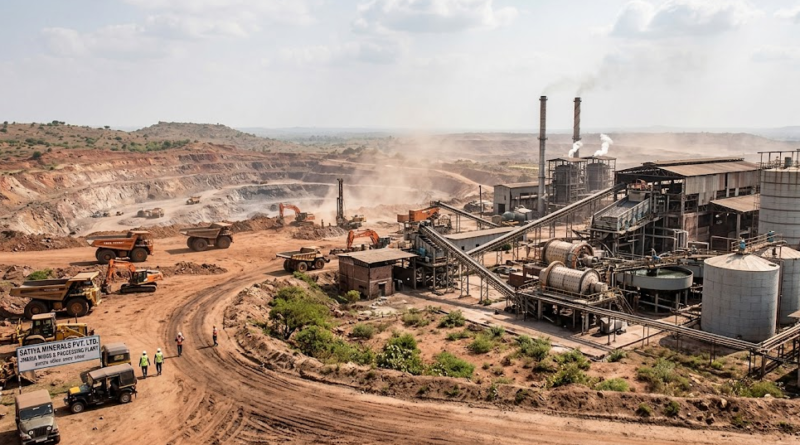
Parliament Passes MMDR Amendment Bill, 2026: Fiscal Regime Overhauled While Protecting 90% State Revenue Share
NEW DELHI — Both Houses of Parliament have passed the Mines and Minerals (Development and Regulation) Amendment Bill, 2026, introducing structural reforms to the regulatory framework governing India’s major mineral sector while preserving the fiscal rights of State Governments.
The legislation amends the Mines and Minerals (Development and Regulation) Act, 1957, with the primary objective of establishing long-term predictability, certainty, and stability in the fiscal and statutory regime governing the exploration and extraction of major minerals. According to details released by the Ministry of Mines through the Press Information Bureau, the legislative changes aim to incentivize private investment in mineral exploration, bolstering national initiatives under Atmanirbhar Bharat and the broader vision of Viksit Bharat 2047.
Addressing concerns regarding federal revenue distribution, the Ministry clarified that the amendment does not dilute the rights of State Governments over land and mineral resources. Under the existing framework, approximately 90% of all statutory mining levies, royalties, and payments accrue directly to the respective States, and this revenue distribution will remain unchanged under the amended regime. Additionally, the regulatory and taxation powers of States concerning minor minerals remain entirely unaffected.
The push for legislative reform comes against the backdrop of substantial import dependency for strategic and industrial raw materials. In the 2025–26 financial year, India imported minerals valued at ₹10,12,529 crore. The government anticipates that greater regulatory clarity will accelerate domestic mineral output, strengthening supply chains for manufacturing, infrastructure, and the clean energy transition. The Bill now awaits formal Presidential assent and publication in the Official Gazette to take effect.